For Kent Wyatt, Delta State was a lifelong calling
Cleveland, MS (08/31/2026) — Contact: Nathan Duff FOR IMMEDIATE RELEASE
Phone: (662) 846-4678
Email: nduff@deltastate.edu
For Kent Wyatt, Delta State was a lifelong calling
CLEVELAND, Miss. - Former Delta State University President Forest Kent Wyatt, whose life became inseparable from the university and the Cleveland community that surrounded it, died Aug. 25 with family by his side in Ridgeland. He was 92. Over 24 years as president, he helped shape the modern Delta State. Over a lifetime, he became one of the people most closely identified with its character.
Wyatt served as Delta State's fifth president from July 1, 1975, until his retirement June 30, 1999. He was the first alumnus selected to lead the university, but his connection to the campus began long before he enrolled as a student.
Wyatt was born May 27, 1934, in Berea, Kentucky, to Almeda "Doodie" Hymer Wyatt and Forest "Jeffie" Earl Wyatt. The family moved to Cleveland in December 1945 when his father was named Delta State's head football coach. At age 11, Wyatt enrolled in the Hill Demonstration School on campus and became what he later affectionately described as a "faculty brat."
Delta State was the place where Wyatt grew up, worked as a lifeguard and began the relationships that would define his life. After graduating from Cleveland High School in 1952, he enrolled at what was then Delta State Teachers College. He played basketball throughout college and also participated in football, tennis, gymnastics and cheerleading. It was through cheerleading that he came to know Janice Collins, a fellow student with whom he would share 70 years of marriage.
Wyatt earned a bachelor's degree in education from Delta State in 1956, double majoring in mathematics and health, physical education and recreation. He later earned a master's degree in mathematics from the University of Southern Mississippi and a doctorate in administration and supervision from the University of Mississippi. He completed advanced study at Harvard University in 1975.
After graduation, Kent and Janice Wyatt moved to Mobile, Alabama, where he taught mathematics and coached football, basketball and tennis. He also served in the U.S. Army Reserve and commuted to Hattiesburg to work on his master's degree. The couple returned to Cleveland in 1960, and Wyatt spent four years as a teacher, coach and administrator in the Cleveland School System.
His professional life returned permanently to Delta State in 1964 when he became the institution's first full-time alumni secretary. In 1969, he was appointed assistant to President James M. Ewing and continued serving under President Aubrey K. Lucas. That experience gave Wyatt an unusually broad understanding of the institution before he became its leader during Delta State's 50th anniversary year.
Wyatt set out his governing philosophy in his first address to faculty and staff on Aug. 22, 1975. Fresh from Harvard's Institute for Educational Management, he called for greater attention to student retention through good teaching and personal attention while insisting that academic standards remain high. He described the faculty he wanted as compassionate, concerned and dedicated. He also told employees that he bore a greater responsibility to them than they did to him.
He pledged to seek adequate salaries, productive relationships with the Board of Trustees and Legislature and the facilities and equipment employees needed to do their work. He said his decisions would be measured by two questions: "Is it fair?" and "Is it best for Delta State University?"
Those questions came to define his leadership. Wyatt was accessible to students and employees and preferred to make decisions with people rather than for them. He listened carefully, kept an open door and treated even routine concerns as worthy of his attention.
His concern for people was especially evident during the recurring state budget reductions of the late 1980s and early 1990s. Faculty, staff, deans and students were brought into discussions about how the university could reduce expenses while preserving its central mission. Wyatt understood that protecting Delta State meant protecting the people who taught, worked and studied there.
Wyatt inherited an institution that had only recently become Delta State University in name. Over the next 24 years, he helped give that name substance without losing the close-knit character that had defined the school he knew as a boy and as a student.
The scope of the growth was considerable. During Wyatt's presidency, the number of faculty members increased from 202 to 328. Every eligible academic program earned national accreditation. Eighteen new buildings were constructed and many others were renovated. Delta State Foundation assets increased tenfold. The university also completed 15 consecutive unqualified state audits while maintaining a reputation as one of Mississippi's best-managed public institutions.
Enrollment, academic programs and the university's service to the region also expanded. Delta State established an independent Division of Continuing Education and Public Service, created new opportunities for adult learners and offered enrichment courses for area senior citizens. New programs in management information systems, fashion merchandising and other fields reflected the changing needs of students and employers.
The Bachelor of Science in Nursing program opened in 1978 to help address the Delta's need for health care professionals. Commercial Aviation began in 1981 and grew into one of the university's signature programs. Delta State awarded its first doctoral degree in 1984 and later broadened graduate study in nursing, social work, criminal justice and commercial aviation. Programs in journalism, social work, environmental science, health care administration and other disciplines further expanded the university's academic reach.
For Wyatt, however, growth was not simply a matter of adding programs or increasing enrollment. He believed a regional university had a responsibility to the communities around it. Delta State expanded its work in rural health, literacy, teacher development, small-business assistance and community leadership. Faculty members carried the university's expertise into schools and towns across the region. The institution's success was measured not only by what happened on campus, but also by what Delta State could do for the Mississippi Delta.
The physical transformation of the campus began early in Wyatt's presidency. Several initial projects had been planned or funded during the Lucas administration, including the second phase of Caylor Hall, which brought new science and mathematics facilities and a planetarium to campus. Ewing Hall opened in 1978, consolidating much of the School of Education and providing new instructional resources. Work also moved forward on the Lena Roberts Sillers Chapel and campanile and a physical education classroom facility.
Later projects included new residence halls, expansion of the W.B. Roberts Library, construction of the Charles W. Capps Jr. Archives and Museum building and extensive renovation of existing facilities. The Hugh Ellis Walker Alumni-Foundation House opened in 1988, giving alumni and development work a permanent home.
Perhaps the most visible expression of Wyatt's belief in Delta State's regional role was the Bologna Performing Arts Center. The center, which opened in the mid-1990s, gave the university and the Delta a cultural venue of statewide significance. Wyatt and the Delta State Foundation brought together private gifts and public support to make the facility possible. The project demonstrated his ability to turn a long-term institutional need into a shared public commitment.
Private giving assumed a larger role across the university during his presidency. A $5 million campaign launched in 1996 had surpassed $10 million by the time Wyatt retired in 1999. Those resources helped strengthen Delta State at a time when public universities faced growing financial pressures.
Not every year of Wyatt's presidency was marked by growth or celebration. He led Delta State through repeated state budget reductions, the long-running Ayers higher education desegregation case and proposals to close or merge the university. His legacy rests partly on what he built, but also on what he refused to allow the university to lose. Sound financial management, strong accreditation, increased private support and deep relationships across the state helped Delta State emerge from those pressures with a larger campus, stronger programs and a more secure place in Mississippi public higher education.
Athletics also remained an important part of the university's identity. The Lady Statesmen won five national basketball championships during Wyatt's presidency, including consecutive NCAA Division II titles in 1989 and 1990. The Statesmen baseball team reached the NCAA Division II World Series in 1977 and finished second nationally in 1978 under Dave "Boo" Ferriss. Delta State also earned recognition for the academic performance of its student-athletes.
Wyatt's influence in collegiate athletics extended well beyond Cleveland. He served two terms as president of the Gulf South Conference and held several leadership roles with the NCAA, including two terms on the Presidents Commission. He also served with national organizations including the American Association of State Colleges and Universities, the American Council on Education and the Southern Association of Colleges and Schools Commission on Colleges. In 2020, he became the first institutional president inducted into the Gulf South Conference Hall of Fame.
By the late 1990s, Wyatt and the Board of Trustees had begun planning for an orderly transition. He announced in fall 1998 that he would retire the following June. His final year included the largest graduating class in the university's history to that point and retirement observances attended by hundreds of alumni and friends. The administration building was named Kent Wyatt Hall in recognition of his service.
Leaving the president's office did not mean leaving the life he and Janice had built in Cleveland. Wyatt remained a loyal champion of Delta State as president emeritus and continued serving the community and region.
He was elected president of the Cleveland-Bolivar County Chamber of Commerce and served as president of the Cleveland Lions Club. He was the inaugural chair of the Bolivar Medical Center Foundation Board and served on the boards of the Grenada Banking System and United Way of Cleveland. He also received the S.E. Kossman Award for outstanding contribution to the community.
In 2005, Wyatt became the 71st president of Delta Council, the regional organization representing the Mississippi Delta's agricultural, business and professional leadership. He brought to that role the same patient and practical approach he had used at Delta State. His work included advocacy for adult literacy, efforts to address teacher shortages, improved access to health care and continued highway development.
Even after leaving office, Wyatt remained a familiar presence at Delta State. He and Janice supported the Kent and Janice Wyatt Student Retention Scholarship, the Kent and Janice Wyatt Faculty Development Fund and the Janice Wyatt Mississippi Summer Arts Institute. The university established the Kent Wyatt Distinguished Lecture and the Kent Wyatt Young Alumnus Service Award in his honor. He was also named to the inaugural class of Legends of Delta State University in 2014.
Wyatt and Janice were longtime members of First Baptist Church in Cleveland, where he served as a deacon. His Christian faith remained central to his life, as did his devotion to his family. Despite the demands of public leadership, he remained a dedicated husband, father, grandfather and great-grandfather. He continued to enjoy sports throughout his life and played scratch golf well into his 70s.
Janice, Delta State's first lady throughout his presidency and his partner in university and community life, died July 12, 2026. Their shared life had been rooted in Delta State since their student years. Together, they raised two daughters, Tara Mounger and Dr. Elizabeth Mitchell. They welcomed generations of students, faculty members, alumni and visitors. To many in Cleveland, it was difficult to think of Delta State without thinking of the Wyatts or of the Wyatts without thinking of Delta State.
Although most people knew him as Dr. Wyatt, his favorite title was the one given to him by his grandchildren and great-grandchildren: Papa Bear.
Kent Wyatt's legacy cannot be reduced to the length of his presidency, the buildings completed during it or the offices he held afterward. It can be found in the students who encountered a stronger university because of his leadership, in employees who knew they would be heard and in a campus that grew without surrendering its sense of community.
He arrived at Delta State as a child, returned as an educator, led it for nearly a quarter-century and remained its neighbor and advocate for the rest of his life. Few people have belonged so completely to an institution or worked so steadily to ensure that the institution continued to belong to its people.
A visitation honoring Wyatt was held Friday, Aug. 28 in Kent Wyatt Hall on the campus of Delta State University. A second visitation was held Saturday, Aug. 29 at First Baptist Church in Cleveland.
###
About Delta State University: Delta State University is a four-year public institution whose nearly 2,800 students come from most U.S. states and more than 45 countries. Acknowledging its beginning as a teacher's college, the University sustains excellence in teacher education while continuing to expand offerings in traditional as well as unique fields of study. Programs such as those available through the Delta Music Institute, the Commercial Aviation Department, and the Center for Interdisciplinary Geospatial Information highlight the University's commitment to meeting the evolving needs of the students it serves with world-leading, industry-acclaimed programs. Situated in the heart of the Mississippi Delta, Delta State offers top-notch academic programs in business, arts, sciences, nursing, education, and more. DSU Athletics has won 15 national championships, 70 conference championships, and 37 regional titles.
Media Attachments

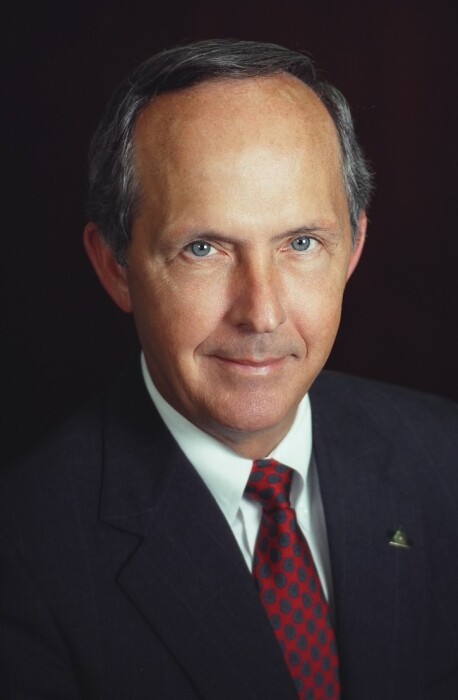
Dr. Forest Kent Wyatt